|
|
|
|
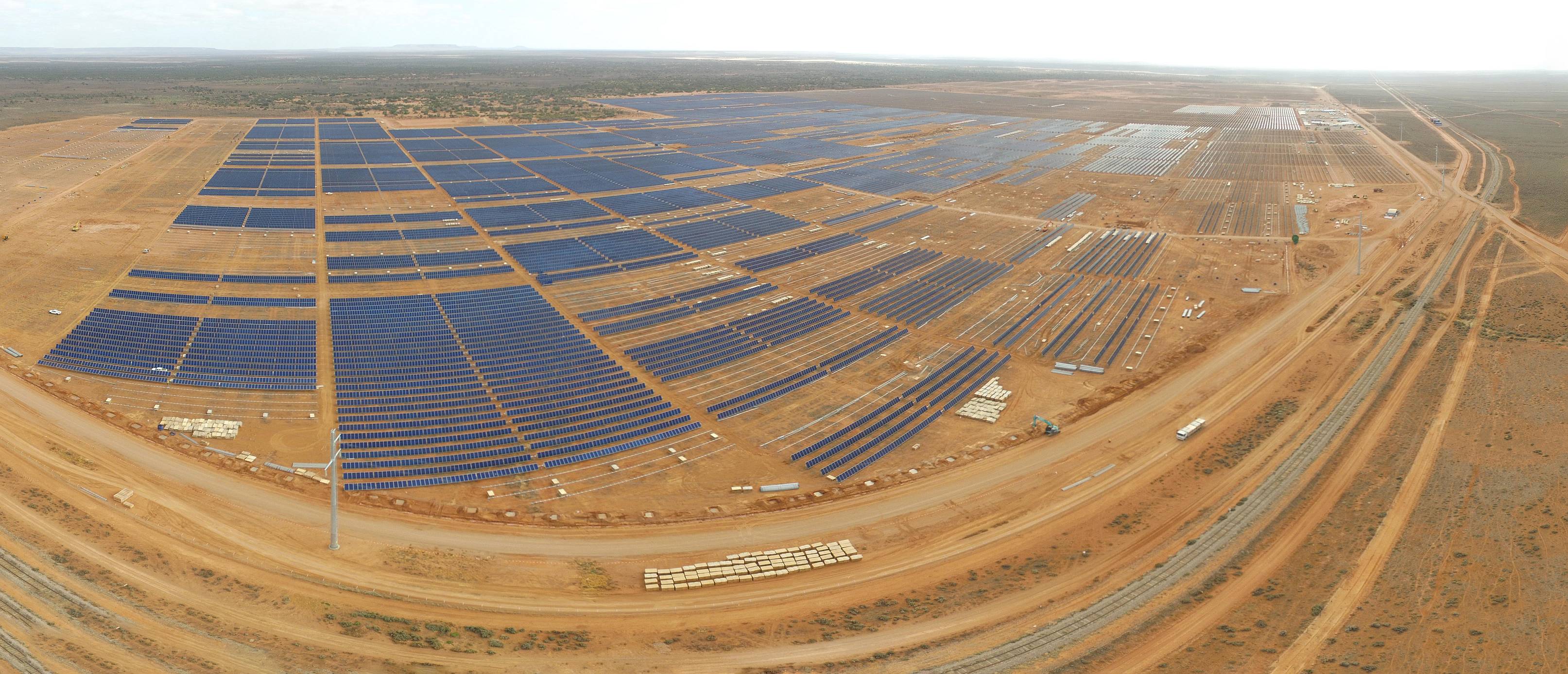
| Bungala Solar Farm, Stage 1, just one of many big solar farms under construction in mid 2018 |
|---|
|
|
|
|
Liddell is old, ailing and unreliableLiddell power station is very old and in poor shape, that's why AGL want to close it down. It was rated at 2 GW, but has been downgraded to 1.68 GW; even worse, its 'firm capacity', the power that can be relied upon at peak demand time, is only 1 GW. (See The Conversation, 2018/04/09, in which Kriti Nagrath, Senior Research Consultant, University of Technology Sydney, also writes about AGL's plans to replace Liddell.)
Peter Hannam wrote in
The Sydney Morning Herald, 2017/09/16, that two of Liddell's four generation units were offline with equipment failures during the previous February's record breaking heatwave, when power was in strong demand.
He also wrote that AGL is planning on spending $160 million more on it before closing it in 2022.
Liddell is pollutingLiddell is the sixth biggest emitter of greenhouse gasses among Australia's power stations and is third or forth in emissions intensity.Liddell is bad for the health of the local people, bad for climate change bad for ocean acidification, bad for air quality and bad for Australia's Great Barrier Reef. The article by Peter Hannam referred to above mentioned 'brain-eating' amoeba, Naegleria fowleri, which caused the closure of Lake Liddell for recreational uses. The amoeba probably became established in Lake Liddell because it is warmed by the power station; the lake's water is used by the power station for cooling.
Renewable energy installations are being built at a great and increasing rateIn 2017, 1.3 GW of solar power was commissioned in Australia. In February 2018 there was more than 5 GW of large-scale renewables under construction including 2.4 GW of solar PV and 3 GW of wind farms.Sanjeev Gupta, the man who saved the Whyalla steel works, is himself considering building 10 GW of solar PV. AGL have announced plans to fill in any gaps left by Liddell. French company Neoen have 1.8 GW of renewable energy installed or under construction, much of it in Australia. There are many other players in the field. Queensland late but now a major playerWhile Queensland has been one of the leaders in the adoption of rooftop solar it did nothing in utility scale wind power from 2000 to 2017. However, in 2018 it is right up with the leaders in utility scale wind power and solar construction, and is home to one of the leaders (Kidston) in the race to build more pumped hydro energy storage.From 2000 to 2017 Queensland had only 12 MW (0.012 GW) of utility scale wind power, at Windy Hill. As of June 2018 the Queensland Department of Natural Resources, Mines and Energy power plant map of Queensland site showed 2.348 GW of wind power proposed or under construction. The same Internet site showed 12.629 GW of large scale solar to be proposed or under construction (with only 0.112 GW already operating).
With all this renewable energy being built Australia can safely shut down its older, more polluting coal-fired power stations.
Why are renewable energy projects being built all over the place?It would be nice to be able to write that it was because people have recognised that we must reduce our greenhouse gas emissions to slow climate change and ocean acidification, but the truth is more that they are the cheapest form of new built power generation.Batteries, pumped hydro and synchronous condensers to fill the gaps and increase grid stabilityThe Hornsdale Power Reserve (AKA, the Tesla Big Battery) showed that utility scale batteries can be highly valuable in maintaining power grid stability; many more big batteries have been proposed.Virtual batteries are to be established, consisting of many thousands of home batteries in South Australia alone. Just today (2018/05/24) this was confirmed by SA Energy Minister Dan van Holst Pellekaan. He said that the SA government would proceed with a trial phase of the previous government's plan for Tesla batteries in 50,000 homes as well as his own government's plan for batteries in 40,000 homes. Pumped hydro power can be used to store electricity generated renewably, and there are plans for four pumped hydro installations in northern South Australia alone.
Electranet has announced plans of building
synchronous condensers, also to assist in further stabilising the power grid.
The implications should be obvious to allEveryone should be able to see the significance in this rate of renewable energy construction and batteries, pumped hydro and synchronous condensers will all help in the introduction of more and more renewable energy installations.There is every reason to think that wind farm construction will continue at a similar or greater rate in the next few years. The price of solar PV in continuing to fall substantially, so the pace of solar power construction is likely to greatly increase. At the time of writing there were another four years before 2022; even with a very conservative – business as usual – estimate we are likely to see at least 20 GW of solar PV and wind power being built in that time.
Are we likely to miss the 1.68 GW of very unreliable power that Liddell is capable of generating?
I think not.
Footnote; the SA experienceSouth Australia closed its last coal-fired power station in May 2016. It has developed a far larger proportion of renewable energy in the period from 2003 to the time of writing (2018) than any other Australian state.Contrary to the lies of the detractors of renewable energy and the supporters of fossil fuels, SA's transition has been a huge success. I have written a full justification for this statement elsewhere on this site, so I will not repeat it here. If SA can successfully close its last coal-fired power station surely Australia can easily close just one of many. |
|
|
Related pagesRelated pages on external sitesWhy Liddell should close as planned, Environmental Justice Australia, written by Dr James Whelan
The true cost of keeping the Liddell power plant open; The Conversation.
Related pages on this siteAustralia's energy futureEnd of coal: why the coal industry has a very limited future. Ethics: a subject that Energy Minister Taylor would do well to learn about. Greenhouse/climate change: the greatest threat currently facing mankind. Killer coal: how the burning of coal kills millions of people world-wide each year. Power to Gas (P2G, renewable energy used to produced hydrogen gas) in Australia. Pumped hydro energy storage. Selfishness or altruism?: self or all? South Australia's success in changing toward renewable energy Angus Taylor, Australia's gobsmackingly biased Energy Minister What matters? in climate change and government Which electricity generation method should Australia choose for the future? Which would you prefer, wind energy or fossil fuels? Why would you choose nuclear power?
Wind power and wind farms in Australia Wind power opposition: almost universally dishonest. |
Index
|