Integration of EVs, home solar, home batteries and the grid

Contents of this page


This is a work
in progress


We hear about win-win situations. The full integration of home roof-top PV panels, electric vehicles, home batteries and the power supply system is a win-win-win-win-win-win situation.

It would be good for:
  1. the owners of homes with solar power,
  2. the electric vehicle industry,
  3. the home battery industry,
  4. the further development of sustainable energy, particularly wind and solar,
  5. the power supply system,
  6. and would help to reduce greenhouse emissions.
This is something I've thought about over quite a long period. I am Australian and this page is written from an Australian perspective but I've no doubt that it applies internationally as well.

This page was started 2026/03/12
Contact: David K. Clarke – ©


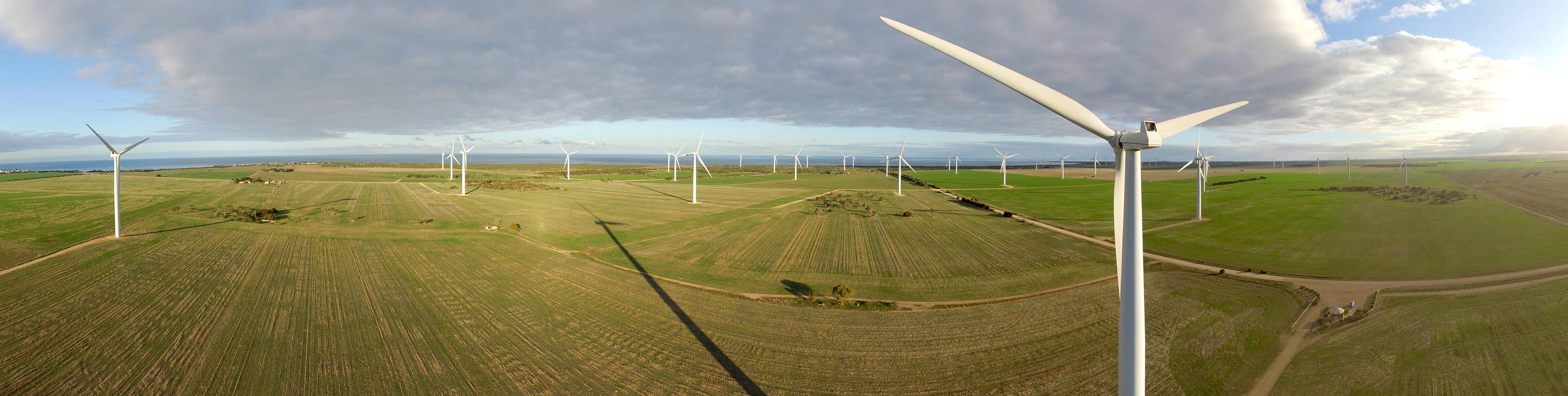
A part of Wattle Point Wind Farm in South Australia
Wattle Point wind farm
Renewable energy, including wind and solar, is the future.
The powers that run the world can either get on with it - to everyone's advantage, or drag the chain - to everyone's cost.


What is needed for full integration to come about?

Government actions


Government inaction

Governments should be pushing hard for change but many are not. Our governments must play a big part in reducing emissions and this is an opportunity most Australian governments are not taking up, yet. The federal government is making some moves, but the regulations fall mainly under state governments and they are moving too slowly.
The first requirement would be for governments to incentivise the buying and selling of electricity by individuals - both home owners and electric vehicle owners.

Governments would first need to provide realistic power prices for the home generators and consumers involved. They would have to provide a price structure based on the amount of power in the system: high selling prices for generators when there is a strong demand for power, and low buying prices for energy consumers when there is an excess of generation in the power grid.

I imagine that there would be a number of legislative actions required by governments for the whole thing to work effectively and for the benefit of all parties.

 
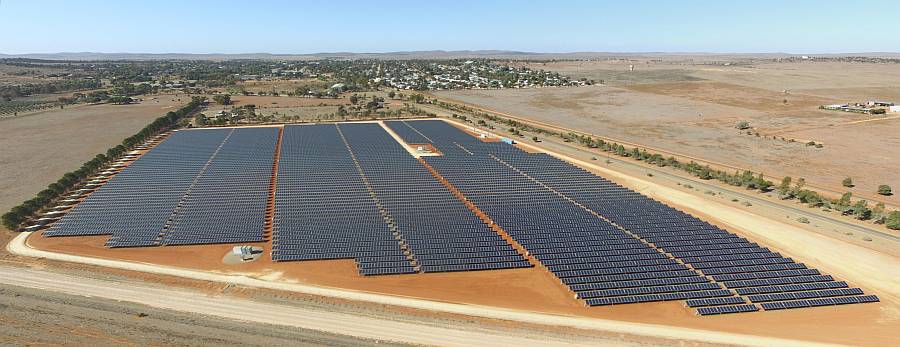
Peterborough, South Australia, 4.9 MW Solar Farm
Peterborough Solar Farm
Peterborough township in the background.
There are many utility-scale solar farms like this in Australia and more are being built all the time.
Wind and solar, including roof-top solar, and other renewables are the future of energy in Australia and the world. Fossil fuels, especially coal are on the way out.

Full integration of all the options is urgently needed.

The electrical distribution operators

Appropriate metering and billing arrangements would need to be put in place.

In Western Australia the electrical transmission and distribution system is owned by the government, in most of the remainder of Australia it is in private hands. I suspect overseas there is also a mix of private and government owned transmission and distribution systems.

The electrical industry

The electrical industry would need to provide the needed hardware and software. How many of the devices needed for interaction between EVs and the grid (in both directions), between the home and the EV, etcetera is already available? Are they readily available?

The electric vehicle makers

The makers of EVs and of EV batteries need to provide the necessary facilities in the vehicles and their charging systems to allow full integration.


Why is full electricity integration needed?

We must move toward the wide integration of power generation and consumption for a number of reasons.

For the power grid

As I write in Australia, where I live, in 2026 there is sometimes more generation in the power supply system than consumption. At other times there is insufficient generation to easily satisfy demand, so expensive and polluting gas-fired generators are called upon to fill the gap.

This is particularly a problem in South Australia, the state where renewable energy developments have taken place over the last decade or two faster than anywhere else in the nation. It is not unusual for wind and solar generation to be greater than consumption, and greater even than consumption plus electricity export to other states. In this situation wind and solar farms have to be shut down for a time.

For the environment

Climate change is the greatest threat to the future, not only of humanity, but of the whole biosphere. Full integration will help in the development of renewable energy and the consequent retirement of polluting fossil fuel based power generation.


The present situation

At present in the state of Western Australia where I live, there is little incentive for home owners with solar power and a home battery to buy and sell power depending on the overall supply and demand situation in the power grid. It seems that the grid operators, Synergy, sell power to consumers at $0.32 per kilowatt hour at all times and buy it from consumers at 'Peak Export', 3pm to 9pm, at $0.10/kWh and 'Off-Peak Export', 9pm to 3pm, at $0.02/kWh. Apart from the time of day, there is no consideration of the level of supply and demand in the power supply system.

The Western Australian power grid is owned by the state government. I believe that at least some other states' power grids are in the hands of commercial organisations. At least some of these are experimenting with providing very low power prices for consumers at times of peak generation and reasonably high prices at times of peak demand.

There is some movement toward a viable power trading scheme between home-owners with solar and batteries (and electric vehicles) and the grid, but it seems to have a long way to go to be sufficient to provide a good incentive.

A viable power pricing scheme could provide an added incentive for people to change from fossil fuel vehicles to electric, but at present such a scheme is only in its infancy.


What is happening at present (early 2026)?

The CSIRO (Australian Commonwealth Scientific and Industrial Research Organisation) is actively investigating renewable energy integration. It is also looking into the potential of vehicle to grid energy interaction.

I've no doubt that a number of countries overseas are also looking into energy integration. It is only a matter of time before the needed integration is achieved, but certainly the sooner the better.


A question to, and answer from, Deep Seek

My question to DeepSeek:
"Can electric vehicles, solar panels on the roof, home batteries and the power grid be integrated so as to work together to the advantage of all parties?

The answer from Deep Seek:
"Absolutely. In fact, adding solar panels to the mix completes the "dream system" of distributed energy. While the previous answer covered the core integration of EVs, home batteries, and the grid, adding rooftop solar transforms the system from a smart consumer of energy into a truly independent and generative ecosystem.

When you integrate all four elements—Solar Panels, Home Battery, Electric Vehicle, and the Power Grid—you create a holistic, closed-loop system that maximizes efficiency, resilience, and financial return. Here is how they work together to benefit everyone.

The Complete Ecosystem: The "Energy House" as a Living Organism Think of a modern home not as a passive box that consumes power, but as a living organism with its own metabolism:

Solar Panels (The Harvesters): They capture energy from the sun. This is the primary "food" for the system.

Home Battery (The Short-Term Stomach): It stores energy for immediate household needs, releasing it at night or during a grid outage.

Electric Vehicle (The Long-Term Reservoir & Muscle): It stores massive amounts of energy for mobility, but also acts as a huge reservoir for the home and grid when parked.

The Grid (The Circulatory System & Safety Net): It acts as a massive backup reservoir. It can supply energy when the sun isn't shining, and it can absorb excess energy when the home produces more than it can use or store.

How They Work Together in Perfect Harmony

With a smart energy management system orchestrating the flow, the logic looks something like this:
  • Solar Harvesting: During the day, solar panels generate electricity.
  • Instant Consumption: That power is used immediately to run the home.
  • Priority Storage: Excess solar power first charges the home battery.
  • Vehicle Charging: Once the home battery is full, the excess solar power flows into the EV.
  • Grid Export: If the EV is fully charged and the home battery is full, the excess solar power is exported to the grid (often earning credits via net metering).
  • Nighttime/Peak Usage: At night or during expensive peak hours, the home draws power from the home battery first. If the battery runs low, it can draw from the EV (V2H) before finally resorting to pulling from the grid.

The Advantages: A True Win-Win-Win

Adding solar to the EV+battery+grid mix amplifies the benefits significantly.

For the Consumer (The Homeowner)

  • Massive Reduction in Energy Bills: You are generating your own fuel (for both your car and home). The goal becomes net-zero energy—where your total annual energy consumption equals your total annual energy production.
  • Energy Independence (Island Mode): With solar, a home battery, and an EV, you can theoretically power your home indefinitely during a grid outage. The sun charges the battery and the EV during the day, which then power the home at night. This is the ultimate form of resilience.
  • Tax Credits and Incentives: In many regions, combining solar, battery storage, and EV purchases unlocks significant government incentives, tax breaks, and rebates that make the entire system more affordable.
  • Future-Proofing: You are insulated from future volatility in electricity rates and fuel prices.
For the Power Grid (The Utility)
  • Decarbonization: Rooftop solar is the fastest way to deploy clean energy without using land. Batteries and EVs solve the "intermittency" problem of solar (the fact that it only works during the day).
  • Voltage Support: Distributed solar and batteries can help regulate voltage on local distribution lines, improving power quality for everyone in the neighborhood.
  • Reduced Strain: During a heatwave, millions of homes with solar are actually generating power during the peak demand hours (when the sun is hottest), drastically reducing the strain on the grid. Their batteries and EVs then act as a buffer when the sun goes down but demand is still high.
For the Environment
  • True Carbon Neutrality: This combination allows a household to approach 100% renewable energy usage for both transportation and domestic electricity. It displaces fossil fuels used by both the grid and the transportation sector simultaneously.
  • Reduced Transmission Losses: Generating power where it is used (rooftop solar) avoids the 5-10% energy loss that occurs when electricity travels long distances over power lines.

Real-World Scenarios

  • The "Sun-Powered Commute": You charge your EV at home using solar power generated during the day. Effectively, you are driving on sunshine, with a fuel cost of nearly zero.
  • The Virtual Power Plant (VPP) 2.0: A utility in California faces a grid emergency on a hot evening. They send a signal. Your smart system, which has been charging your EV and battery with solar all day, automatically discharges a small amount of power to the grid. You get paid for that power, and the utility avoids a blackout.
  • The Storm Prepper: A hurricane is forecast. Your smart system automatically commands your EV and home battery to charge fully from the grid (if sunny, from solar) before the storm hits. When the power lines go down, your home seamlessly switches to "island mode," running on battery and EV power, with the solar panels replenishing them during the day.

The Technical Challenge: The "Energy Router"

The key hardware component enabling this is the Hybrid Inverter or Energy Gateway. This device must manage multiple direct current (DC) inputs (solar, battery) and alternating current (AC) inputs/outputs (grid, EV, home appliances). It must also handle bi-directional charging for the EV.

Modern systems are moving towards DC-coupled architectures (where solar charges the battery directly without converting to AC and back), which is more efficient.

Conclusion

Integrating solar panels with EVs, home batteries, and the grid is the ultimate expression of a smart, modern energy system. It completes the circuit.

Without solar, you are just a smart consumer (buying low, selling high).

With solar, you become a prosumer (producing and consuming).

This integrated system maximizes the use of free, clean energy, minimizes waste, provides unparalleled resilience for the homeowner, and offers the grid a flexible, powerful tool to manage the transition to a renewable future. It is the blueprint for the 21st-century energy grid."


References and related pages

Related pages on external sites...

Australian Broadcasting Commission: EV batteries are fit to run a home or even power the grid – but some car brands say 'no'. This is a very informative article.

CSIRO: The challenge, supporting grid resilience in the face of transformation. Australia’s electricity system is rapidly transforming. (CSIRO is Australia's "Commonwealth Scientific and Industrial Research Organisation".)

CSIRO: How can we unlock the energy storage potential of EVs? "CSIRO is working with the electricity industry to test how EVs could store cheap or on-site solar energy and then use it in the home and export it back to the grid during peak periods."

The Conversation: written by David Richard Walwyn, published 2026/02/08: Connecting home solar and electric vehicle batteries to the grid could boost South Africa’s clean energy and strengthen the electricity system.

Energy Matters, published 2026/02/18, "Australia Grid Stability: Electrification & Storage - Discover how electrification and battery storage are the keys to Australia's grid stability. Learn about VPPs, EV integration, and how you can save today."

Related pages on this site...

Climate change

Environment: if we destroy our environment we destroy ourselves

Reduce your emissions at the same time as increasing your mobility with an e-scooter

Electric vehicles

A post-fossil fuel transport system; written in 2005, now outdated by the rapid changes in the sector.

I've written something on this subject in my page on clean transport in the section titled the full potential of electrical vehicles is not being used in 2025.